Beneath the skin
Subcutaneous fat lies beneath the skin. It is a different compartment from the fat deeper inside the abdomen. Clinical Liver Disease
YOUR POT BELLY
The belly is what you can see. The biology behind it is what interests us.
Abdominal obesity is associated with higher cardiovascular and metabolic risk. Understanding that risk is a medical task, not simply a cosmetic goal. American Heart Association
BEYOND APPEARANCE
The location of fat matters, not just the number on a weighing scale. Visceral fat and fat within the liver are associated with metabolic risk in ways that differ from fat beneath the skin. Clinical Liver Disease review
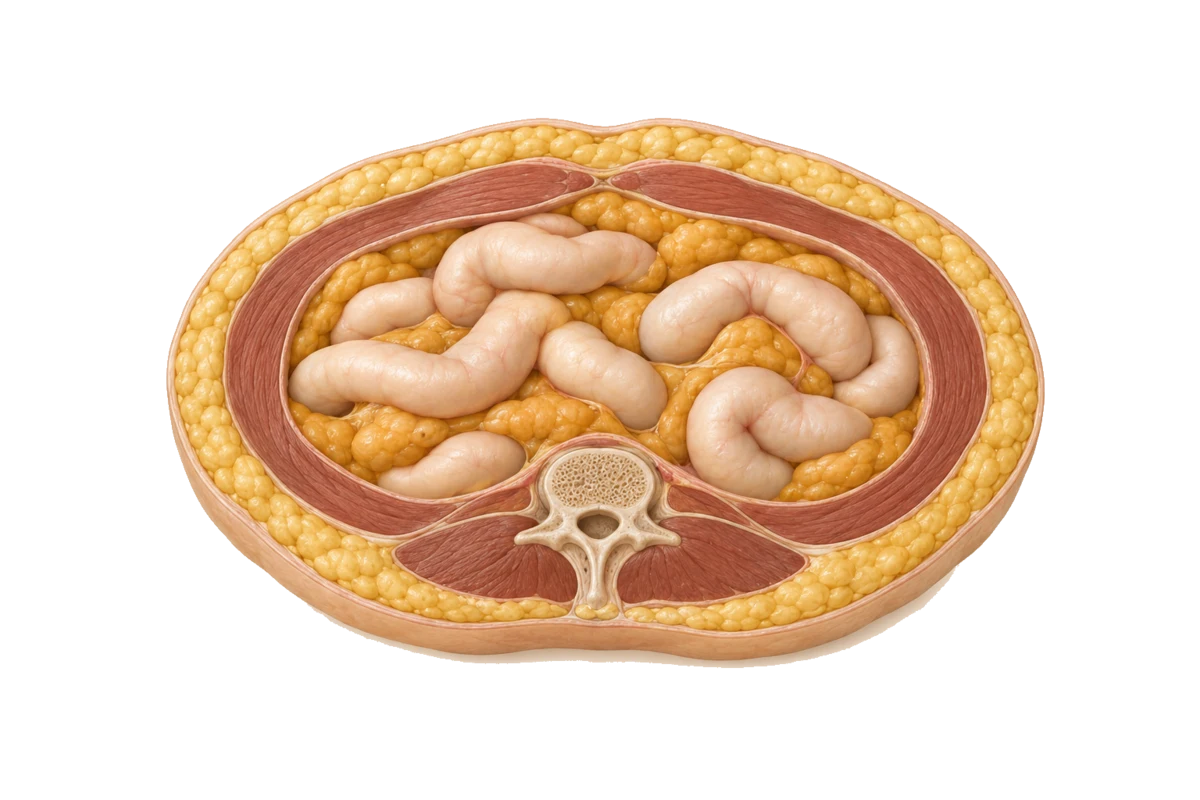
Subcutaneous fat lies beneath the skin. It is a different compartment from the fat deeper inside the abdomen. Clinical Liver Disease
Visceral fat is located deeper in the abdomen, around internal organs. Higher amounts are associated with insulin resistance and cardiovascular risk. Clinical Liver Disease
Fat can also accumulate in organs such as the liver. Neither body weight nor waist size alone tells the whole story of an individual’s fat distribution. Clinical Liver Disease
OUR STARTING POINT
We do not begin by assuming that everyone with a pot belly needs the same investigations, the same medicine or the same explanation.
BIOLOGY, NOT JUST STORAGE
Visceral and ectopic fat are associated with insulin resistance and inflammatory changes. These are important biological relationships, not proof of the same process in every person with a visible abdomen. Clinical Liver Disease review
Our approach is to investigate a clinically relevant question, not to label every patient as “inflamed” or sell a routine inflammation panel.
A DIFFERENT QUESTION
Bloating can make the abdomen feel full or look bigger. Causes can include gas, constipation, food intolerance and other digestive conditions. NHS guidance on bloating
Tell the doctor if your abdominal size changes during the day, if discomfort accompanies it, or if symptoms persist. The medical assessment should not assume that every abdominal change is explained by fat.
Persistent bloating deserves medical review; sudden severe abdominal pain needs urgent assessment rather than a routine programme enquiry. NHS guidance
FOR MEN AND WOMEN
Younger adulthood, midlife and later life can bring different priorities. We consider your circumstances rather than treating age, gender or appearance as a complete medical explanation.
For women, the conversation may include menstrual history, pregnancy plans, menopause and any existing diagnosis such as polycystic ovary syndrome. PCOS is associated with increased risk of impaired glucose regulation and type 2 diabetes, regardless of age and BMI. International PCOS guideline
Understand the health context
NEXT